

- 2
- 3
- 4
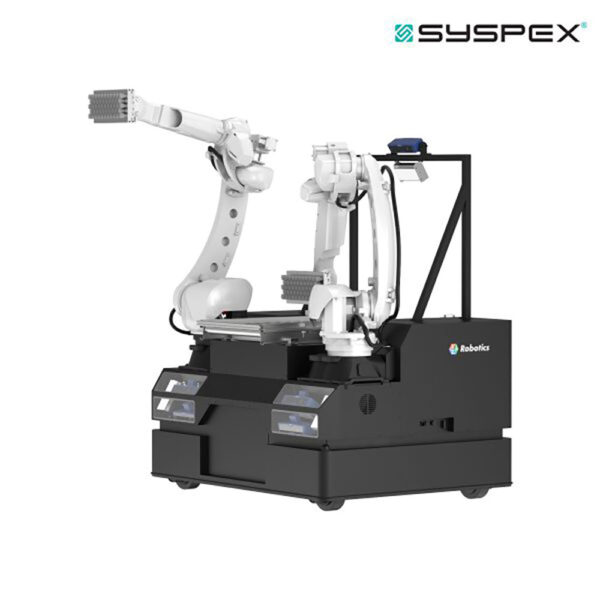
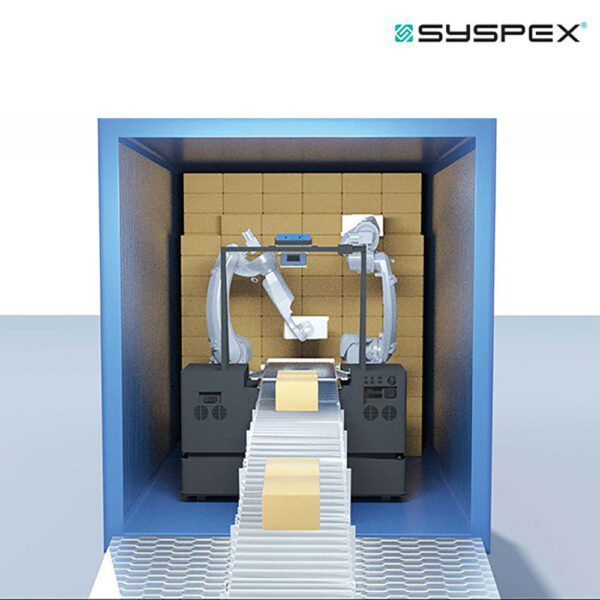
Dual-Robot Collaboration for Seamless Port Operations
Managing incoming shipping containers and outbound trailers requires an agile, synchronized workflow to prevent yard bottlenecks. Our advanced Automatic Robotic Container Loading & Unloading system utilizes a specialized dual-component robotic configuration that adapts perfectly to various warehouse dock setups. The system consists of two key components working in tandem: a dedicated mobile unit for seamless container loading and unloading inside the trailer, paired with a high-capacity robotic arm for efficient palletizing and depalletizing on the staging floor.
Advanced Perception and Continuous Multi-Shift Operation
Relying on manual labor to manually stack or unstack heavy boxes in tight, hot containers results in high turnover, frequent worker injuries, and slow processing times. As an end-to-end solutions provider, Syspex resolves these dockside bottlenecks by sourcing intelligent, plug-and-play automation. Driven by advanced robotic technology and intelligent perception algorithms, these robots ensure precise material handling with every movement. They collaborate smoothly with either a flexible roller conveyor or a telescopic belt conveyor, utilizing a cleverly integrated power cable system to deliver continuous, stable operation across multiple shifts without battery charging downtime.
The SYSPEX Advantage in End-to-End Integration
- 30 Over Years of Industrial Experience With over three decades of work, we act as your trusted solutions provider. We deliver complete automated material handling consultation, robotic fleet planning, and dock workflow design.
- Consultative Engineering We work closely with your team to review your container profiles, parcel dimensions, and software interfaces, ensuring your automated robotic components integrate flawlessly with your existing conveyor infrastructure.
- Regional In-House Technical Expertise Our own technical engineer team is located in Singapore, Malaysia, and Indonesia. This means we can provide rapid deployment, precise sensor calibration, and preventative maintenance support to guarantee peak continuous uptime.
- Sustainability Commitment We source highly efficient, direct-power robotic lines that eliminate heavy battery disposal waste, allowing your high-volume facility to run continuous operations with a optimized, eco-friendly energy draw.
Frequently Asked Questions
The system divides tasks between two specialized robotic units for maximum efficiency. The primary mobile robot enters the trailer to perform the physical lifting, loading, or unloading of loose boxes, while the secondary robot remains at the base of the conveyor line to handle automated high-speed palletizing and depalletizing.
Yes. Thanks to integrated intelligent perception algorithms and advanced 3D vision technology, the system instantly calculates the optimal stack patterns and spatial coordinates for mixed parcel profiles. This ensures precise, secure, and damage-free material handling with every single operation.
Unlike battery-powered mobile robots that require hours of charging downtime, this system is a plug-and-play solution designed for continuous operation. The heavy-duty power cable is cleverly integrated along the tracking conveyor frame, keeping the floor clear of obstructions while providing uninterrupted electrical supply.
The system offers unparalleled flexibility and can be paired with either a flexible roller conveyor or a telescopic belt conveyor. This allows the system to easily adapt to your existing dock layouts, smoothly extending into or retracting out of the shipping containers as the loading process progresses.
Absolutely. The system features remote control functionality, allowing operators to monitor and adjust the equipment from a safe distance outside the container. Furthermore, the robotic arms are equipped with built-in safety sensors and automatic stop triggers to protect surrounding warehouse personnel.
The return on investment is realized through a massive acceleration in container turnaround times and the complete elimination of manual heavy-lifting injuries. By turning a slow, strenuous multi-person manual job into a continuous, single-operator automated workflow, businesses drastically reduce labor overhead and maximize shipping capacity.